

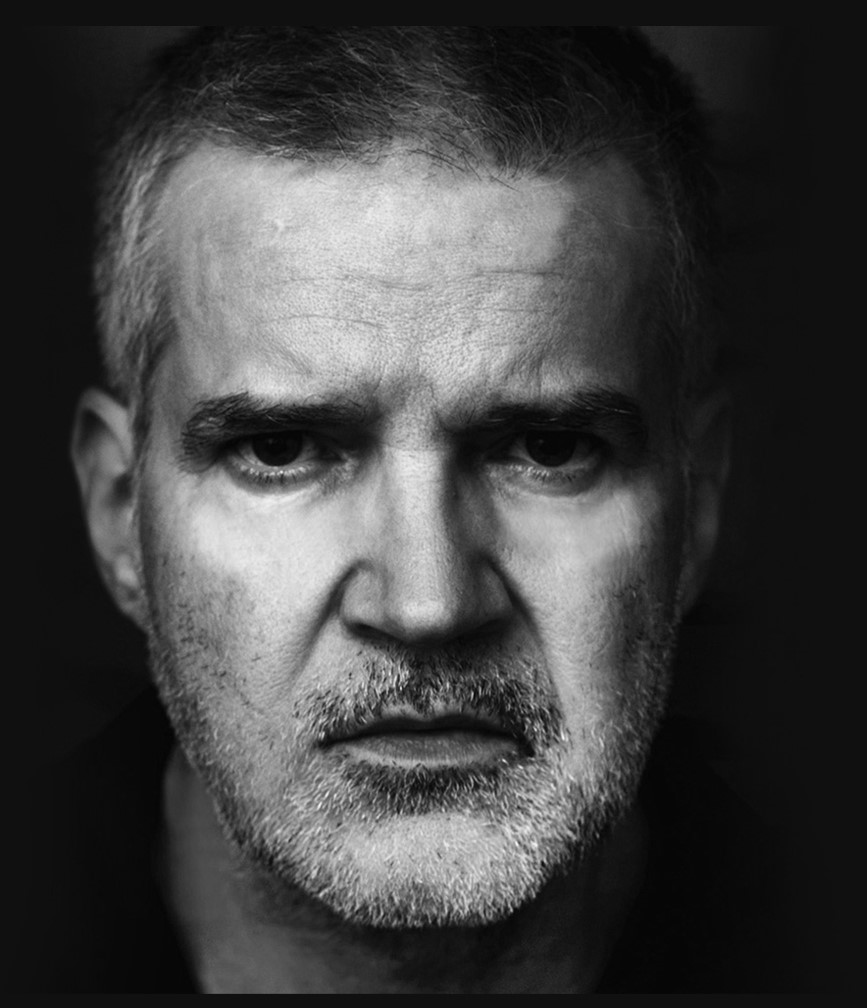
I was a fan of Lloyd Cole and the Commotions from the moment I heard the first guitar chords of ‘Perfect Skin‘ (their debut single). I saw them live quite a few times in the UK and abroad. In 1995 my band Jump Rope supported Lloyd on a short solo tour of England including a date in Dublin, he also produced a couple of tracks by us. You can read more about all those adventures here.
Lloyd Cole‘s new album, the wonderful ‘On Pain‘ has been getting plenty of plays by me, since it came out at the end of June. (It has also been getting plenty of 4 star reviews in the music press).
I asked Lloyd if he would be up for answering a few questions about the album, the writing and recording process, for my blog. He very kindly said ‘yes‘.
So we FaceTimed earlier this week – I was able to see his studio, The Establishment where he now lives, in Massachusetts and ask my questions…
Monday 24th July 2023
J.B. How are you?
L.C. I’m pretty good. I mean, I’m just a little bit overwhelmed with getting ready for a tour. Doing all the things I have to do with my house and having a record coming out.
Lots on the go?
I don’t have a lot of quiet days. I did take the weekend off and watch the golf.
Oh yeah, I saw you Tweeting with John Niven.
Oh, John? He’s hilarious. He makes obscenity very amusing.
Yes, he has a skill for that!
I know you’ve got your home studio, The Establishment? How long have you been building it? Is it complete? Is that where you are now? (Lloyd turns his camera so I can see the studio) Oh, that is nice.
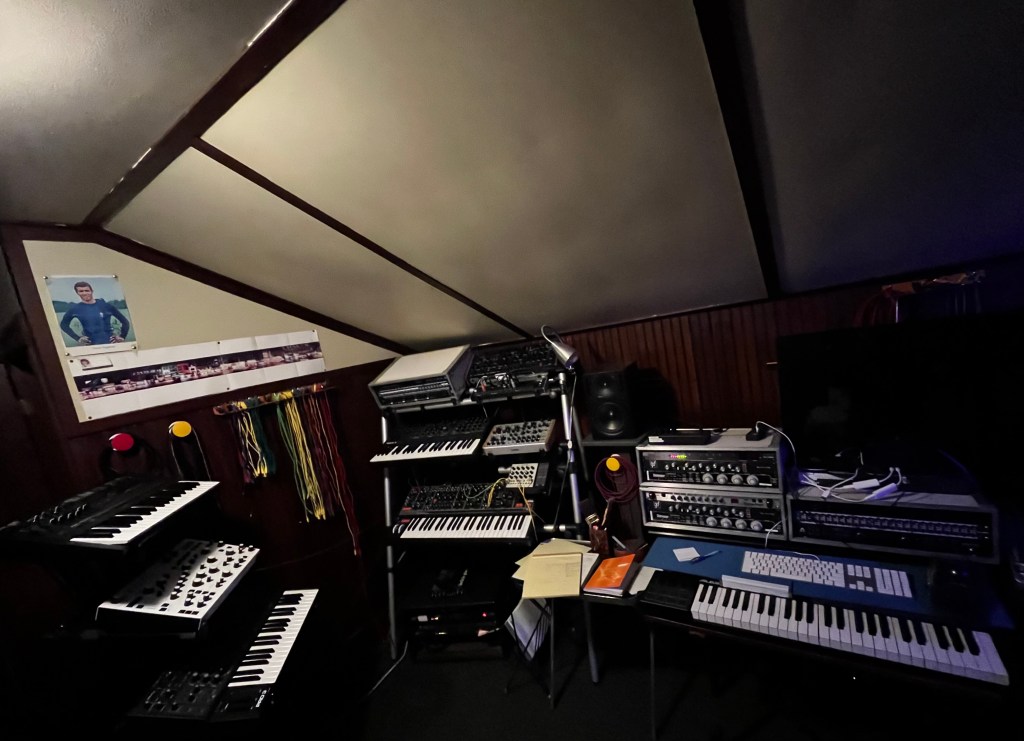
I’m here, yeah. That’s the keyboard synth corner. With Peter Osgood on the wall.
I’m going to come and see you at the Union Chapel. And I’m very curious to know how you’re going to do it, but that I’ll ask more about that later.
It’s boiling hot over here right now, the summers here can be really brutal.
Are you at your mixing desk now?
One of the things with the studio that I realised after wasting a massive amount of money on stuff is, that when it’s just one or two people you don’t need a mixing desk. I’ve got a couple of little mini-mixers for monitoring.
How long has it taken you to build this studio up? Has it been a sort of an ongoing process?
It has been an ongoing process. Everywhere that I’ve worked, there’s been a room, I’ve always called The Establishment. After Peter Cook‘s club, he opened in the late ’60s in Soho.
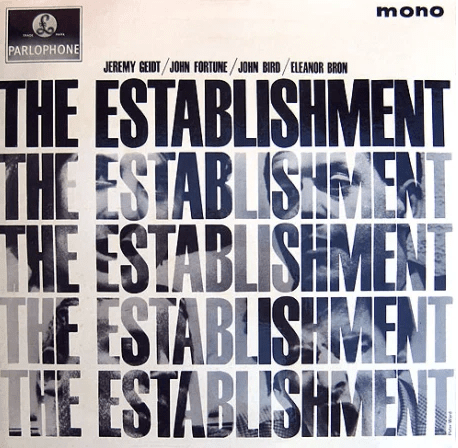
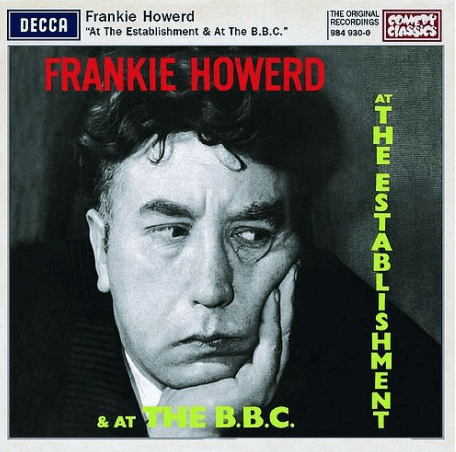
So I suppose I built a studio in 1992, which I had to liquidate two years later, because my career imploded. Just before we worked together actually, and instead of having a studio in my home, I went to renting a room in a place that has a couple of studios and a couple of rehearsal rooms. I put the remains of the studio in there. Part of what I’ve got here, the API stuff and the Geoffrey Daking stuff I’ve had ever since then. It works for my voice, so I haven’t really changed that. And then, when I moved up to Massachusetts, I rented a space in one of those sort of multimedia type buildings, like a converted mill that’s got all sorts of things in it. I made ‘Music In A Foreign Language‘ and ‘Antidepressant‘ in that room mostly. Then, we bought this house and it’s got this attic. So I moved up here. And other than it being brutally hot, sometimes it’s quite nice. I put in a green carpet so I can practise putting!
After refining it and refining it and refining it, I’m really close to having it about perfect for what I want to do. I can record analogue stuff really easily. I’ve got no latency in my setup. I’ve got parallel monitoring for everything. So I don’t ever worry about that stuff. I don’t know why anybody would want to record through the computer and listen to it back with latency.

So what software do you use on your computer?
Oh, I’m back using Logic after after pretty much trying everything. I went probably a whole year, about five years ago, trying out seeing if I could go back to Ableton, trying Bitwig, trying Studio One, and they’re all flawed. And so it’s like the choice of evils, really.
And I do a lot of stuff now, using the the iPad and the modular before I even go into Logic. So for example, the song ‘Wolves‘ on the album, was actually created using the modular system and some sequencing and looping in the iPad. I find the iPad interface a lot more simple and actually limited. The thing about Logic, which I don’t, like is it’s unlimited and you have to fix your own limits. Otherwise you end up with infinite possibilities for every choice you have to make.
When you use your iPad, are you using sounds on the iPad or are you putting the synthesizers into the iPad?
Both. What I was doing with ‘Wolves‘ is, I was using a sampler application to create the loop, so I created the sound using the modular synth and then did the looping in the iPad. And then I found something that sounded musical, and I exported it into Logic, and Logic has this tempo detection tool. You can tell it that what you’ve put into it, say that’s eight bars, then it’ll say ‘OK, then the tempo must be 80.66 BPM’, which is what ‘Wolves‘ ended up being, yeah.
Is that the quantize button or is that something else?
No, that’s just literally what Logic detects and so, if I’d have been smart, what I would have done was I would have time stretched a tiny little bit of Logic to make it exactly 80, but I wasn’t that smart, so I carried on working at 80.66 and that is the song that I had four different remixes made!
Yeah, (p)remixes, I thought that was really good. I’ve never heard that before, ‘Premix’.
Well, the idea was this. You know that there’s such a long lag these days between finishing a project and vinyl being able to come out? I was frustrated that I spent all this time making this album and I wanted to release something. And I couldn’t. So I thought well, let’s do something that’s digital-only in the interim, to give us something before the album. And initially the idea was going to be four mixes before the album. But two things happened. One was, Barry from Mogwai had personal stuff that meant he had stop his remix. And Chris Hughes‘s remix, (or Chris Merrick Hughes as he now goes by) is so insane and fantastic that I couldn’t let people hear it before the album because it would just be too confusing. If you’ve heard the album version of the song and then you hear this version you go, ‘Oh, that’s amazing, how can you possibly have done that?’, but if the earliest version you listen to, is the album version, that’s really slow. So we ended up deciding to do two before and two after and they are all finished now. I finished Barry’s version and and he’s very happy with that. I’m very pleased. And so they’re going to come out after the second single, which is ‘The Idiot‘.
Oh cool – cycling and leg warmers. Nice image. I can see Iggy in leg warmers.
I think it really happened, it really happened. Pictures of Bowie, there’s photos of him wearing leg warmers in 1977.

Excellent. Riding a bike though?
Well, I just imagined that they cycled in Berlin because it just seemed to be they were, you know, they wanted to be a bit more healthy than they had been.
Nice idea. Having the studio now upstairs, do you find you’re using it more, do you find a sort of freedom that you can try ideas without having to worry about getting home afterwards or anything?
You know, sometimes, I think what I like it for, is sort of being able to experiment. You can see here (camera shows semi-modular synthesizers and lots of complex patches), that’s an experiment, I haven’t finished yet.
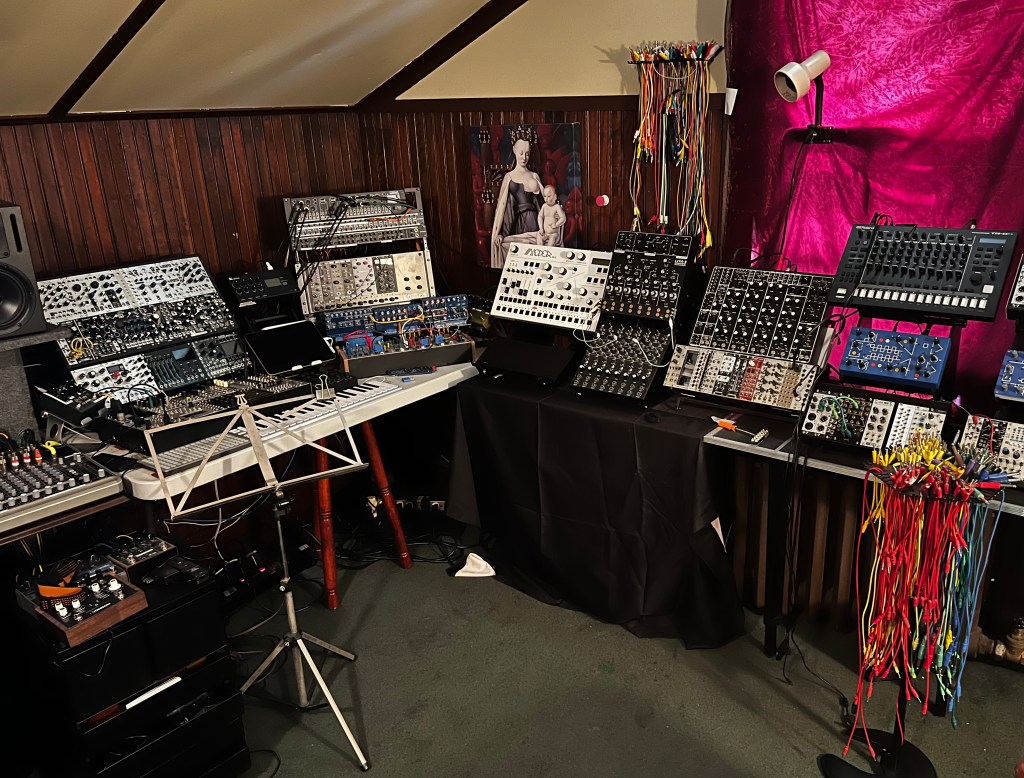
But in terms of actually working on song ideas, yes, but, I’m not very good at multitasking. So when I’m doing other things like right now, I’m doing prep for the tour and practising bass and trying to learn songs. I’m not very good at turning that part of my brain off and going straight into doing something else, so I feel like, the older I get, the more I just need to do blocks of this and blocks of that. So that I can focus on one thing over a longer period of time, and so I’m using the same part of my brain. I found that I’m not good at doing stuff like that when I was making ‘Antidepressant‘ in that last room. I was programming drums in the morning and everything would be ‘fine, I’ve been working on that, so I’m going to try and write some lyrics now’ and I just couldn’t.
My brain was still in programming mode, which is definitely a different part of the brain than whatever I used for writing lyrics. And I couldn’t write the lyrics for that album until I went on tour. In Germany. With a bunch of friends. And I was just sitting in the back of a van and I was somehow or other able to just focus on them at that time. So I no longer try to to sort of wear too many hats in one day. I’m just not good at it.
When you write a song, you said in this instance you did the music first, then the lyrics came after. Is that how you’ve always done it, back in the Commotions days, were you on a guitar, writing music and lyrics at the same time? Or did you find you did the song, the melody and then the lyrics afterwards?
There’s no one method. I mean, ‘Wolves‘ came out of that sound, the looping sound. The first song on the record ‘On Pain‘, came out of a simple melody that I actually just came up with and some of the words right away. Without the guitar or anything. I just sang it into the ‘phone, I thought ‘this is nice’. And so that was half the song almost written and I had to say, ‘I wonder what key this is?’ And ‘I wonder, what chords I’m meant to play under it’. And quite often when I write in that way, and then I find the chords, I’m always incredibly surprised about how incredibly simple they are. I think they’re going be quite complicated. I had a song called ‘Myrtle and Rose‘ on an album from about ten years ago, called ‘Standards‘, it’s written around this little arpeggio with 5th fret capo. I just found these arpeggio shapes that I really liked, and I wrote the song around that. Then when I came to finding out what the chords actually were, they were just C, D minor and F! It’s got a minor kind of sound to it, and to find out that it was actually a major when I finally put it all together, was quite surprising. So there is something to not being musically trained that I’m constantly being surprised by.
You’ve got a couple of co-writes on ‘On Pain‘, with Neil, and was Blair a co-writer as well? (Neil Clark and Blaire Cowan were both in The Commotions with Lloyd in the ’80s). Was that the same song or were they different songs?

Blair on the left and Neil, the right.
They’re different songs. Blair co-wrote ‘The Idiot‘, ‘I Can Hear Everything‘ and ‘This Can’t Be Happening‘, and Neil, co-wrote ‘You Are Here Now‘. All three pieces were delivered fairly close to finished versions. They did recordings of their ideas that were instrumental. Obviously they weren’t the only things they sent me, but the main instrumentation of ‘The Idiot‘ is just Blair’s demo that I just changed one of the chords. I did a bit of cutting and pasting and rather than asking him to rearrange it, I just chopped up bits of audio and put it back together in the order that I wanted to hear it in and surprisingly it worked. Then we we added quite a lot of stuff afterwards. But the meat of it was was just Blair’s composition. I just had to figure out how to sing over it, which is the challenge, especially when somebody sends you something which you love, but it sounds very complete. I think it’s maybe a little easier to sing over something that sounds like it’s got space left for the vocal. Blair tends to write complete instrumental pieces of music. So for example, ‘This Can’t Be Happening‘, gosh, all I added to that – I took away his chorus because I didn’t like the chorus he’d written, and I just kept the one chord progression going around and around. All I did was create that thing that sounds like wind and rain going on swirling around. I created that and then Chris Hughes came up with the idea of the phase vocal thing in the middle section of the song. But you know, the meat of the song, is what he delivered me.
Is it Blair that does the lead melody bits?
Yes. Yeah.
They sound great. Sounds very ‘Heroes’.
Yes. The thing is that both Blair and Neil, we work well together. Which is, they respond quite well to to me, establishing a basic aesthetic. So we did it on ‘Guesswork‘ as well. I sent them pieces and by the time they’ve heard four or five pieces, that I’m working on for an album, there’s obviously going to be an overall aesthetic. They both work pretty well responding to that and I think Blair loves working with us. Those kind of Korg MS 20 sounds that are on ‘The Idiot‘, he’s got a sort of penchant for working with sounds that just sound like sort of classic Prophet 5 polysynth type sounds, that sound like they could be from today, or they could be from 1990, or they could be from 1978. You can’t really tell which. I like that in what he does. I try to do something similar when I’m programming synthesizers. I don’t want to timestamp the record.
It feels like you’ve got a new, fresh relationship with Neil and Blair when it comes to working together. Would that be right?
You know it never really went away. I mean, Neil wrote one of the songs on ‘Antidepressant‘ and he played on it as well. He plays quite a lot on ‘Guesswork‘. Blair also delivered two of the tracks for ‘Guesswork‘ in a similar manner to how he delivered on this. He delivered the song that became ‘Remains‘ and also the song that became ‘When I Came Down From The Mountain‘. Neil tends to add to things. Mostly Blair tends to sort of instigate things.
That’s interesting. There’s no real drums on the album, are there? ‘Warm By The Fire‘ sounds the most like a traditional drum kit.
It does, but it isn’t. It’s just drum machines.
And do you do all the drum machine programming?
Most of it. We fine tuned quite a lot of that one, mixing it in Wiltshire when I went to Chris’s place. There was probably a little bit of fine tuning of the drums and bass, in the four or five days before we started mixing properly. For most of the tracks. I’ve got this Patreon project where I’ve been tracking the history of the songwriting and also some rough mixes. How songs started out and then how it developed. I’d even forgotten, I mean, the last rough mix that we did of, for example, ‘This Can’t Be Happening‘, there’s no drums at the end, so we must have decided to do that at the very last minute. I can’t remember. It’s quite good to be able to keep track of it with the audio, because sometimes it’s quite difficult to remember when did we decide to do that? If you’ve got all the mixes, creating a sort of story through the audio, you can figure out ‘oh I didn’t think of that until quite late in the process’, or ‘oh gosh, I thought of that much earlier than I thought I had’.

Is there a moment where Chris becomes involved, where you start sending him over rough mixes of work you’ve done?
Chris was involved from the very beginning, I mean, I sent him the first rough mix of ‘Wolves‘ and he was like, ‘Yes, yes!’.
And then does it become a bit more fun when you get to Wiltshire?
Well, it would have been if I hadn’t given them COVID!
Oh no. Oops.
I caught COVID on the flight over. I didn’t know.
Oh, no!
I didn’t know I caught it. Yeah. So it was still fun, but it wasn’t as much fun as it should be because we couldn’t, for example, I couldn’t touch the computer, you know when I wanted. I do now remember doing a few things on the computer, the first couple of days and then when we realised what was going on, I was like, ‘Oh well, I can’t touch the computer anymore’.
Basically, Mark (Mark Frith, is Chris’s main engineer who engineered the mixes and helped with Lloyd’s remixes) didn’t catch it, but Chris and his wife did. Initially, the plan was, I was going to be there for two weeks. But I ended up being there for about two and a half weeks because I couldn’t fly back until I was clear. It wouldn’t go away. It kept dragging on, I felt fine, but I kept testing positive.
It’s amazing they’ve got this, this, technology now, when Chris and Mark were in the studio. I had to be quarantined in the hotel room for a few days, but I had my computer and we had the internet and they were able to play stuff in real time. So, I mean, it would be possible to mix a record with me not going over there, if needs must.
Yeah, gosh.
And certainly, I mean, the idea for this record, was actually after we did ‘Guesswork‘, in this manner of, Neil in Toronto, Blair in Glasgow, me here and Chris on FaceTime. After we made the record, we said ‘well that went really well. Wouldn’t it be fun if we just went to Chris’s house next time and just got together for six weeks and did it quickly instead of spending a year?,’ which is what it seems to take if you do it remotely. And we work. That was the plan before COVID.
Do you ever have other musicians up there with you, or is that just your space?
Very rarely. My son is a pretty great musician, my oldest son. So he did come by and try some ideas out, but it was at a point where we were not very focused. Some of his ideas were almost great, but not quite and we ended up erasing them all.
How about the backing vocals, Joan As A Policewoman and the others?
She did them remotely and then Dave and Renee went into a studio in Montclair, owned by a guy that they work with all the time, and he recorded them professionally, which was great because Joan‘s stuff on ‘Wolves‘ is quite subtle. I mean, you can tell it’s not just me, but she’s sort of lurking behind making things sound a little bit more, polyphonic, I guess. But the choir sound on ‘More Of What You Are‘, really, really needed a lot of harmonies to work. So it was great that Dave and Renee were available because I can’t do stuff like that.
OK, but do you record your own voice?
I record my own voice. And I kind of created all of the synth textures with the voice, like all of the things that sound like vocoders and what have you. I did all that and I created quite a lot of the harmonies on ‘This Can’t Be Happening’. All of that I created with the computer. I didn’t sing them.
I didn’t realise that. OK, so all the vocoder-type ideas, they were yours? It’s really effective. Your voice sounds great on the album, by the way.
Yeah, pretty much all. You know, it’s, thank you, after ‘Guesswork‘, I’m just singing into my live mic. I mean it’s a Neumann condenser, but it’s just the one I use for my live work and just a couple of years ago, I thought maybe I might start getting better performances if I kind of seemed as if I was on stage. So, like quite a lot of the time I’m up here, just sort of pretending I’m on stage singing.
Going back to the drum patterns. Do you tend to start with the rhythm? Would you start with the drum beat and that inspires you to put stuff on top of it, or does that come after you’ve got more of the idea of how the song’s going to go or the music’s going to go?
I mean, especially the thing I was showing you, over there, these little guys. (points to the modular patches again)
Oh yeah yeah.
These guys are, they’re not necessarily drums. But they kind of can be.
OK, OK.
They’re sort of like little baby modulars, but they’ve got two oscillators in each and they create sounds that kind of remind me of early Roland drum machines, but not. What’s lovely about it, is this guy you go, ‘well, that’s kind of like a CR 78‘, but it isn’t. They’ve got internal FM synthesis, so one of the sounds can be FMing the other one. So the bass drum could be FMing the hi-hat or whatever, and you can get these great interactions and you can create these lovely rhythms using different patch cables. So quite a few of the rhythmic ideas for the record started out just in there and I’ll be I’ll be recording one and I’ll send it to Chris. I’ll send him a quick video and I’ll leave it turned on. I’ll leave it up overnight because if you turn it off, you can’t get it back. You lose everything. There’s a couple of things where you you don’t lose the patching, but a lot of the rhythms that you create by hitting the buttons and it remembers while it’s turned on. So I’ll make a video and send it to Chris, who goes, ‘yeah, record it now’. So yeah, some of them were recorded like that. But I also have the potential now, if I’ve got a track going in Logic, I can have the tempo of the tracking, Logic creates a MIDI clock, which in turn will create an analogue clock, which I can plug into this so, I can synchronise it.
Ah, oh great. OK.
And also if I create something, just using the little blue things, which are called double knots and it’s clearly a rhythmic thing then, if I’m feeling lazy, I can just record it straight into Logic and have Logic detect the tempo.
I’m trying to figure out how to play some of the songs for the tour.
What we’re going to do with the tour is, I’m going to go on stage on my own, with an acoustic guitar. And then the band are going to gradually join me, probably Neil will come on first, and then I’ve got a moment in my mind, when I can hear a really great point for the drums to come in fairly dynamically and possibly surprisingly. But I’m figuring out which songs to play in the first set. I’m going to be playing acoustic guitar for the whole set probably. And the first set’s going to be more acoustic, less and less electric. And so trying to figure out how to play certain songs, we’ve done, I’ve done, so many times. I figured out how to play four or five of the songs from ‘Guesswork‘, just with two acoustic guitars, or sometimes just with one. So I know it can be done. But it is a challenge.
I was fiddling around with with the title track, ‘On Pain‘, a couple of weeks ago, and I found a position to play it. Using a capo on the second fret and it’s in E so I’m playing the D shape and then an E minor shape and then I think to myself, ‘God, that’s that’s exactly the same as that song from…’!
Oh no!
It doesn’t. The recorded version doesn’t sound like it at all, but the minute you start playing it on guitar. You realise,’ Oh God, I’ve just rewritten one of my own songs!’.
It’s far enough apart, but the chord structure in the verse is almost identical and I didn’t realise. Because I was just playing it on synths I just didn’t feel like it was similar at all, and that was the song I was telling you, that I wrote from melody anyway. But the melody is actually very similar to the guitar solo on the other song!
You’ve got a large back catalogue. It must be quite tricky to avoid situations like this?
There have definitely been instances where years later I’ll go, ‘oh God those two are pretty similar, aren’t they?’, but thankfully it never seems to occur to me when I’m making the records, or if it does, then I stop. I don’t think that the synthesisers are really impacting the actual harmonic and melodic content that much. I’m just enjoying working with these textures really right now.
The stuff you’ve done with the voice blends in with the textures so well, it’s great.
I hope so, I mean, one of the decisions on this record was to try and treat the voice without any preferential treatment compared to any other instrument. So we think nothing about putting guitars through fuzz boxes and synthesisers and I just thought ‘well, you know what, we’re not going for naturalism. This sounds right now.’ So it was fun to to see how far one could go. I think I went a little bit too far once, there’s a very nasty sounding distorted vocal that I had on ‘You Are Here Now‘ that I thought was good but, Chris and Mark said, ‘That’s horrible!’ -‘Alright. OK.’
Were there any particular albums or artists you were listening to at the time of coming up with the ideas or recording ‘On Pain‘?
Well, I try not to listen when I’m recording. I was aware of trying to make a record that would maybe sit next to the records that I love, but I’ve got a certain type of sound, like ‘The Idiot‘ to be honest. ‘The Idiot‘ is a little bit more brutal than this, but I was thinking of ‘Tilt‘ by Scott Walker. And also ‘Climate of Hunter‘, by Scott Walker and ‘The Electrician‘, which is actually a Walker Brothers record. Scott does four tracks and the other guy does four tracks and Scott’s four tracks are amazing.
This song, ‘The Electrician‘, is just. It’s astonishing. So, I was thinking about that. I was also thinking about trying to be more in the way that I present things, in terms of wanting to go further in both the directions I felt I was going in with ‘Guesswork‘. In terms of exploring ideas related to minimalism, trying to find ways to have less going on. I’m very jealous of people, especially, you know, Plastikman?
Yes. Yeah.
I mean, you just have like a drum and a bass and like one bleepy synth or something and it’ll sound amazing.
Yeah, yeah.
I’m sort of jealous of people like that. Can make stuff that minimal and be brave enough to put it out.
So I’m trying to go in both directions, I think I’m trying to become more confident. To be able to try and put stuff out like that, that’s got very little backing. And on the other hand, I’m quite interested in making stuff which is quite a lot more complex and dense, and I quite like the idea of putting the two things together so that there’s more contrast.
For me, it feels like you’ve kind of come full circle, with the experimental stuff, the instrumental music you’ve done. And then the songwriting on this album for me, particularly, they join.
That was the big sort of jump where ‘Guesswork‘ was to try and dare to do that. Because I’ve had a sort of demarcation in my life ever since the album ‘Bad Vibes‘ which was the previous time I tried to do something like that and it went very badly. So I think I had a sort of – keep your synthesisers and your experimental music away from the songs. But like I said, I started to find that the records that I was liking to listen to were records which did bridge those boundaries and so, one of the reasons it took me so long to get started making ‘Guesswork‘ was because I knew it was going to be really difficult and take a really long time.
I just had to really just keep plucking up the courage to finally do it. And also I knew I had to do it on my own. I knew the work had to be done on my own, I knew I had to find out if it would work or not and I didn’t want to have other people sitting around, while I went Fail! Fail! Fail!
Do you enjoy your social media, as part of the release process?
I did enjoy Twitter before Musk took over that. And I still enjoy it somewhat, but I’m well aware that in terms of why I got started, I had to because that’s the M.O. these days, you know, it’s what independent artists have to do and I also felt that if you’re going to do it, you have to do it yourself, because if it’s not you, people figure it out, and why on Earth would they follow you if it’s not you? Unless it’s like tour news or whatever. So everything that is on my pages that is in the first person is me. And my concert promoters got a little bit frustrated about that because they keep wanting to put these – what they call ‘dark ads’ – and saying, ‘I’m going on tour ‘- I’ll do it every now and again. It’s just, you know, ‘Give me the materials I need’. But if you’re going to do it, if you want to do it, if you want to pay for it to get more people, you need to say ‘Lloyd Cole is going on tour’.
Yeah, yeah, that makes sense.
And you need to let them know it’s you, otherwise the credibility of my pages will be undermined and so yeah, I still don’t really understand Instagram. I don’t go anywhere near TikTok.
Yeah, very wise!
But I do find Facebook incredibly frustrating. I only use it for business.
But I do like talking with people you know like, Niven and he’s hilarious on Twitter.
Thanks so much for answering my questions.
Well, I’m going to get back to practising the bass and trying to learn this little thing this – C4 Synth Pedal by Source Audio – turns your bass into a synth.

Are you actually you going to be playing bass guitar then?
I’m going to be playing acoustic in the first set and then bass in the second, because there’s only four of us. Ideally, I’d like to take six of us out, but I can’t afford a six piece. I can afford to take a four piece and crew. It’s been quite encouraging, in 2006 I was playing fairly small rooms and now pretty much back to playing about the size as we were playing in the mid ’90s.
That’s great! I’m very much looking forward to seeing the show!
‘On Pain’ is out now.
Lloyd Cole on tour:
OCTOBER 2023
Fri 06 NEWCASTLE UPON TYNE Tyne Theatre and Opera House
Sat 07 LIVERPOOL The Philharmonic Hall
Sun 08 DUBLIN Olympia Theatre
Tue 10 MANCHESTER Albert Hall
Thu 12 ABERDEEN Tivoli Theatre
Sat 14 EDINBURGH Usher Hall
Sun 15 GLASGOW Royal Concert Hall
Tue 17 YORK Barbican
Thu 19 LONDON Union Chapel
Fri 20 LONDON Union Chapel
Sat 21 LONDON Union Chapel
Mon 23 BOURNEMOUTH O2 Academy
Tue 24 CAMBRIDGE Corn Exchange
Wed 25 IPSWICH The Corn Exchange
Fri 27 BUXTON Opera House
Sat 28 COVENTRY Cathedral
Sun 29 NOTTINGHAM Albert Hall
Tue 31 BRIGHTON Dome
NOVEMBER
Thu 02 COLOGNE Tanzbrunnen
Sat 04 PARIS Le Trianon
Sun 05 LEUVEN, Belgium Het Depot
Mon 06 AMSTERDAM Melkweg
Joining Lloyd on stage will be Blair Cowan and Neil Clark as well as Glaswegian Icelandic drummer Signy Jakobsdottir.

 Indie Through The Looking Glass
1 Comment